- Underwrite.In
- Posts
- How to monitor risk indicators in real-time?
How to monitor risk indicators in real-time?
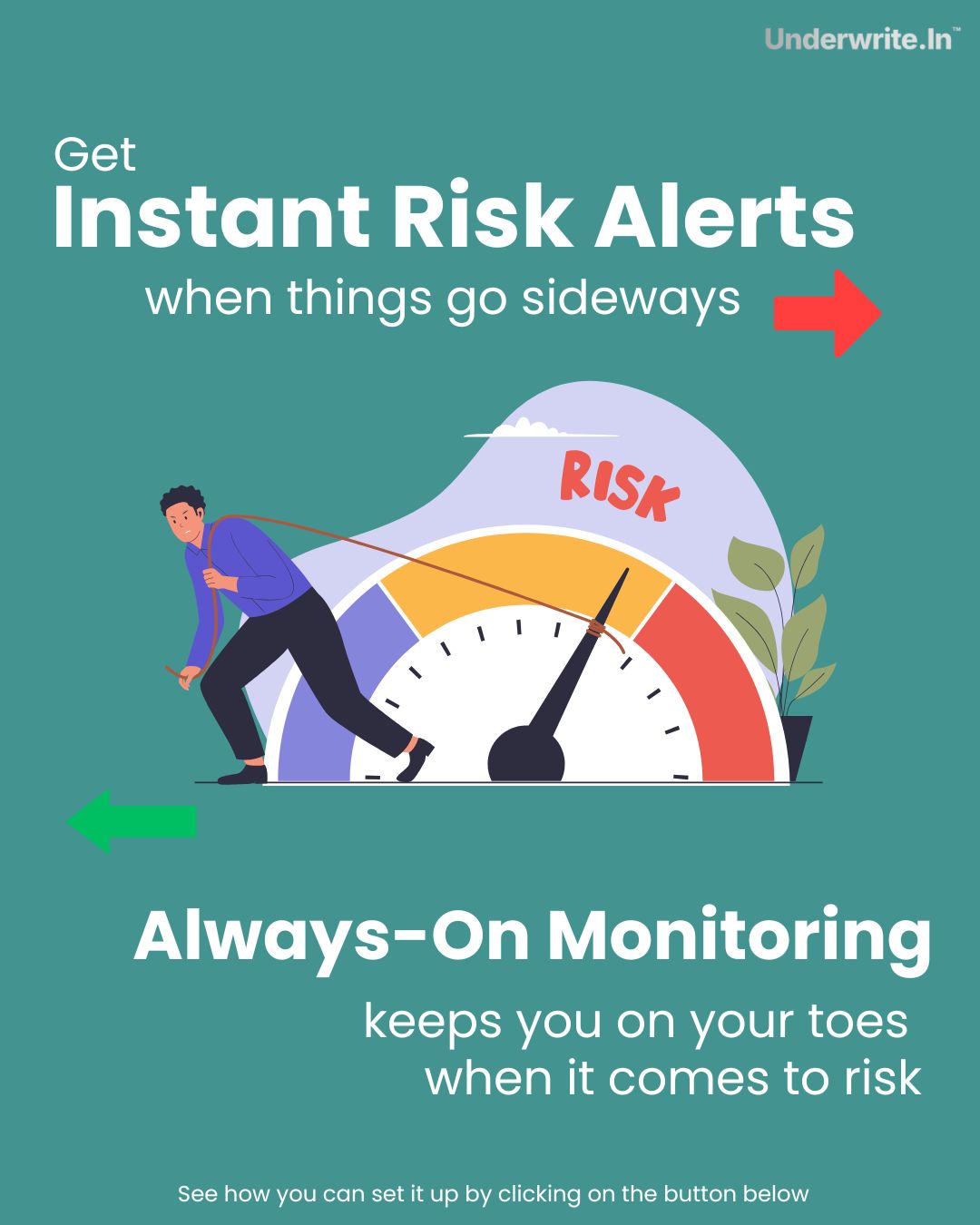
Always-on monitoring delivers instant risk alerts

Shen Pandi
November 28, 2025
Last June, a Midwest hailstorm triggered 20,000 claims.
Total damage was approx. USD 135 million.
Here’s the frustrating bit.
Underwriters knew the storm was coming. Weather forecasts predicted severe conditions. But policyholders? They got alerts too late to do anything about it.
According to Meteomatics' 2025 analysis, accurate real-time weather alerts could have prevented millions in damage.
Here's the brutal math for you.
142 natural catastrophes struck in 2023 alone, a new record.
Global insured losses hit USD 154 billion in 2024.
The problem isn't the storms. It's the silence.
Most underwriting systems run on batch processing. They refresh overnight. Maybe weekly. Claims data updates quarterly.
Meanwhile, risk indicators change by the hour.
This gap isn’t just inefficient, it’s costing the industry billions and leaving policyholders vulnerable
That’s why, we at Underwrite.In, have built an AI-powered underwriting assistant, that automatically identifies unusual risk patterns or outliers that may indicate elevated risk factors.
No more waiting for batch updates. No more preventable losses. Let me show you how it works!

A quick snapshot of how Underwrite.In hand how risk alerts can help you be ready.
What ‘always-on’ actually means in underwriting?
Always-on monitoring isn't about more dashboards. It's about different architecture.

Source: SmartDev AI Insurance Study 2025
Traditional systems process data in batches. Data is collected all day. Processed overnight. Reports are generated in the morning and decisions made by afternoon.
By then, the risk has evolved.
An always-on system, just like the one by Underwrite.In is based on event-driven architecture.
Data flows continuously. Algorithms analyze them in milliseconds. Alerts are triggered instantly and decisions happen in real-time.
The difference shows up in three layers:
Risk indicator monitoring - IoT sensors track physical assets continuously.
Telematics monitor driving behavior. Credit scores, claims history, weather patterns - everything updates live.
Threshold-based alerting - When indicators cross predetermined thresholds, the system notifies underwriters immediately.
No waiting for reports. No quarterly reviews.
Predictive escalation - Machine learning models forecast which risks will deteriorate.
They flag accounts before claims happen, not after.
But why does always-on matter?
Catastrophe losses compound when alerts lag.
For example, the 2024 Los Angeles Palisades caused USD 275 billion in economic losses.
Early warning systems could have triggered preventative actions. Instead, insurers paid out millions in preventable claims.
Fraud slips through without real-time validation. Real-time monitoring flags inconsistencies the moment they appear.
Batch systems and processing? They catch fraud three months after payout.
Portfolio accumulation risks hide in plain sight. You can't see concentration risk if your data is 48 hours old.
Real-time, always-on monitoring will flag it instantly.
Re-underwriting opportunities evaporate.
When your policyholder's risk profile changes - new driving violations, business expansion, health issues etc. you have a 30-day window to adjust pricing.
“The risk feedback loop that allows us to make continuous improvements or adjustments to products has become more sensitive to the changing needs of risk managers and reflective of emerging risks."
”
Aon's vaccine shield challenge
In 2021, Aon faced an impossible challenge.
To protect global COVID-19 vaccine shipments. They were temperature-sensitive cargo with time-critical delivery and billions in liability.
Traditional insurance? Useless. Claims would take months. Spoiled vaccines couldn't wait.
Aon's solution? IoT sensors plus real-time monitoring.
They embedded temperature sensors in every shipment. Connected them to real-time analytics platforms and set automatic triggers.
When temperatures deviated from thresholds, there were instant payouts.
✔️No claims process.
✔️No investigations.
✔️Automatic loss payments.
This reduced vaccine spoilage dramatically. Accelerated claims settlement went from months to minutes. There was improved transparency across the supply chain.
But here's what matters more.
Aon proved parametric insurance works. Real-time monitoring enabled new insurance products previously impossible.
Today, 43% of economic losses from disasters go uninsured. Always-on monitoring closes that protection gap.
Your mindset shift - from reactive to predictive
Underwriting has always been backward-looking. Historical data, past performance, and proven claims patterns.
Always-on monitoring flips that model.
77% of insurance executives like you adopted AI in 2024 - but only 5% will see tangible results.
Why?
They automated existing processes instead of transforming decision models.
The mindset shift requires three changes:
From annual reviews to continuous monitoring - Risk doesn't wait for renewal dates. Neither should you. Real-time data means real-time pricing adjustments.
From siloed data to integrated intelligence - Always-on monitoring combines telematics, IoT sensors, weather data, credit scores, social data, claims history.
From response to prevention - The best claim is the one that never happens. 90% of executives report no stakeholder barriers to adopting drones for preventative inspections.
The companies making this shift? They're not just faster. They're fundamentally different.
That's not incremental improvement. That's transformation.
🎥 Watch a quick video on how always-on monitoring is impacting the insurance industry.
Underwrite.in's ‘always-on’ monitoring is spot-on
50+ underwriters trust our validation engine. They're not just identifying risks faster, but also preventing them entirely. The benefits for you include:
Real-time document monitoring & alerts
Traditional systems batch-process submissions overnight. Underwrite.In analyzes documents the moment they arrive.
Email comes in at 3 PM with updated financials showing deteriorating ratios? Our alert fires at 3:02 PM.
Our AI continuously monitors all submission documents for red flags: missing endorsements, coverage gaps, accumulation risks.

Dynamic risk scoring with instant threshold alerts
Stop waiting for quarterly reviews to spot deteriorating accounts. Underwrite.In recalculates risk scores continuously as new data arrives - claims filed, credit reports updated, and industry trends shift.
When scores cross your predefined thresholds, the system alerts your team immediately.
Integrated claims history & portfolio exposure tracking
Your biggest blind spot is accumulation risk that you can't see because data sits in silos. Underwrite.In aggregates claims history across your entire portfolio in real-time.
Always-on monitoring to detect risks faster
Underwrite.In’s Gen-AI powered underwriting assistant integrates seamlessly with your existing ideology and process habits. No massive overhauls required. No lengthy implementation periods. No business disruption.

You choose this intelligent automation to,
enable proactive interventions and loss prevention. Your underwriters receive an immediate alert when a key risk metric shifts.
ensure your risk assessment remains accurate throughout the policy lifecycle, leading to more precise pricing.
accelerate decision-making and enhancing efficiency, allowing your team to focus on complex cases.
I suggest you schedule a personalized, one-to-one demo with our underwriting experts to see how you can automate your underwriting tasks for quicker TaT.
We'll show you exactly how a real insurance claim submission flows within your system, from email receipt to AI-assisted decision-making.
No buzzwords, no complexity, just the complete underwriting transformation that gives your underwriters their time back to become more effective.
Always-on is right on!
Always-on monitoring isn't a nice-to-have anymore.
Every hour of delayed detection costs money. Every missed alert increases exposure. Every batch-processed report lets risks compound.
Here’s your three actions for this week:
📋Audit your current monitoring frequency. How long from risk change to alert?
📋Identify your highest-value risk indicators. Which metrics justify real-time tracking?
📋Test event-driven alerting on one portfolio. Pick your highest-exposure segment.
📋Monitor continuously for 30 days.
Find any gaps? Come back to this email and click on the ‘GREEN BUTTON’ below.
The underwriters winning today don't just react faster. They see risks before they materialize.
Time to turn the lights on. Always-on…
Your opinion matters!
Hope you loved reading our newsletter as much as we had fun writing it.
Please share your experience and feedback with us below to help us make it better.
How did you like our newsletter? |
Team Underwrite.In